
Watch Real Student Journeys

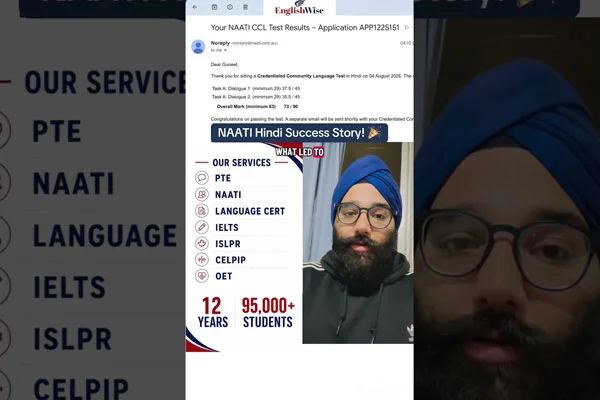
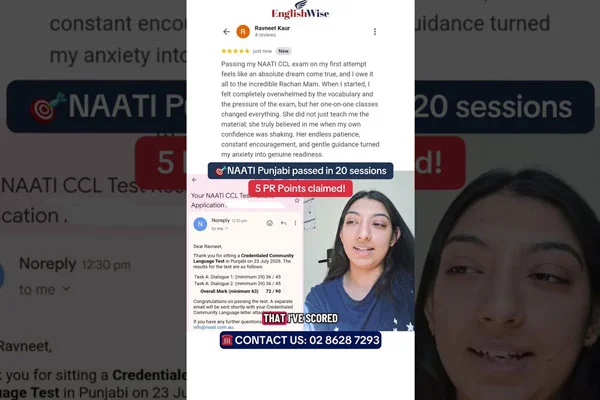
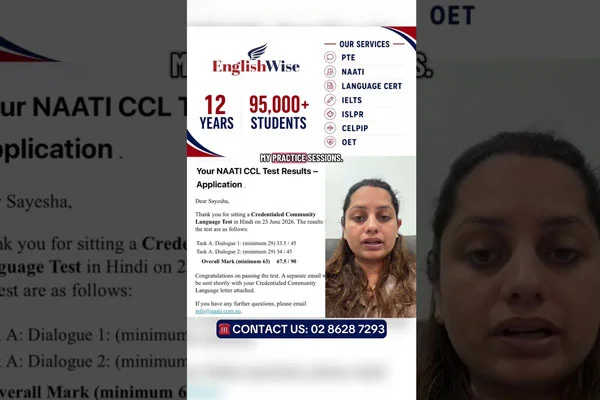

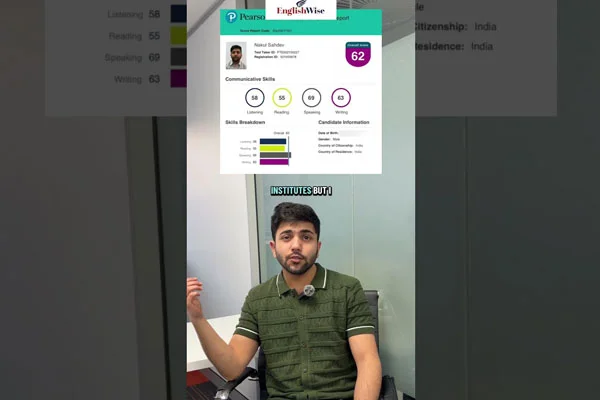
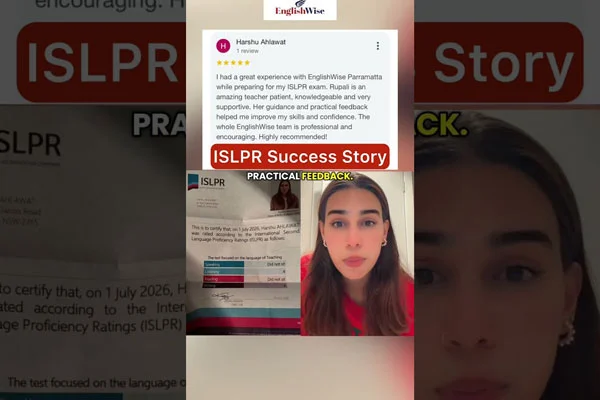
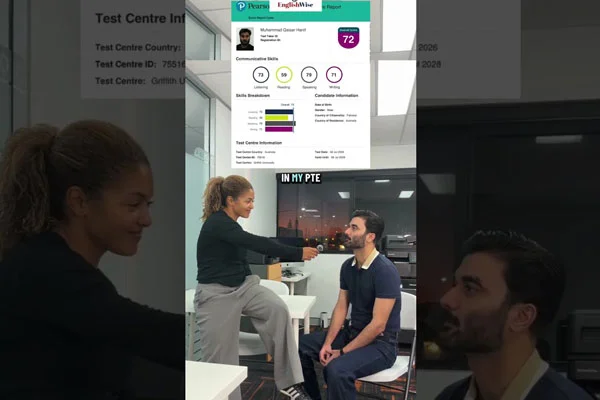
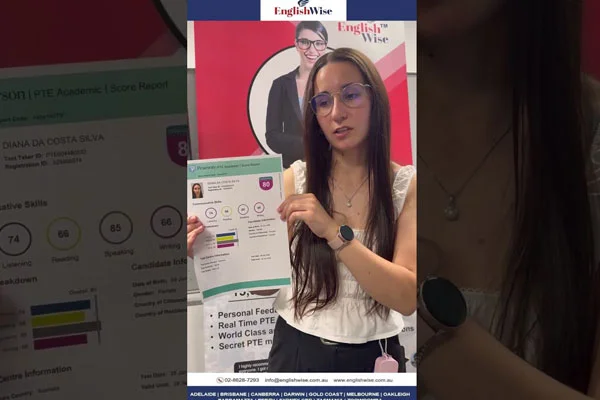
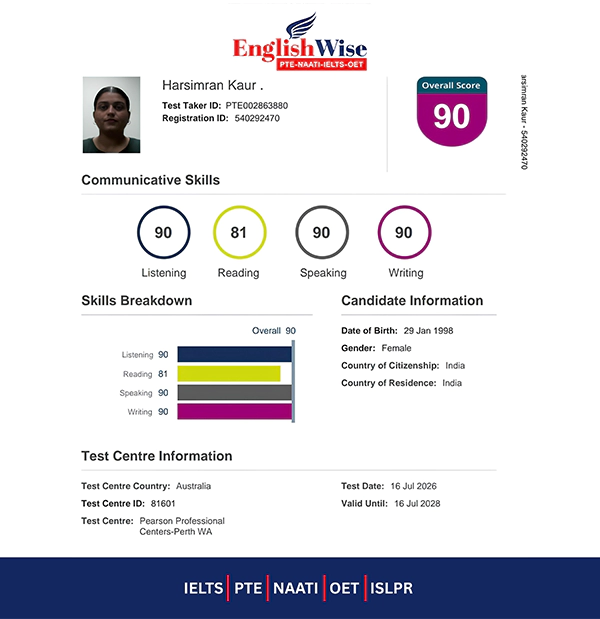
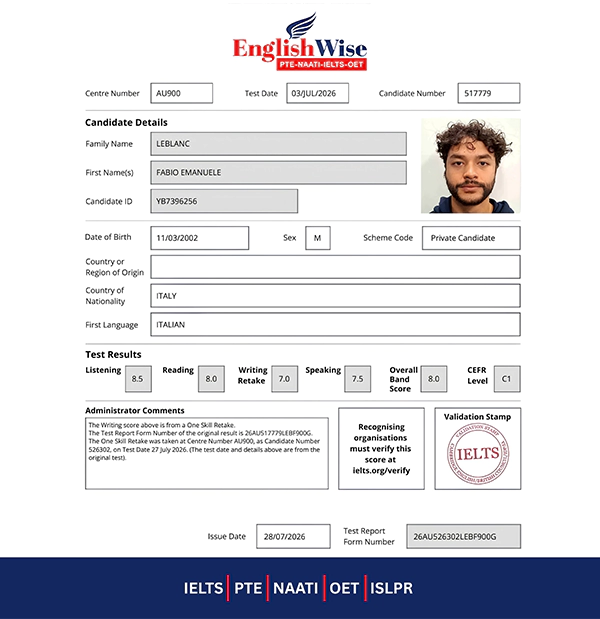
Proven Results
Rated 4.8/5 by our past students
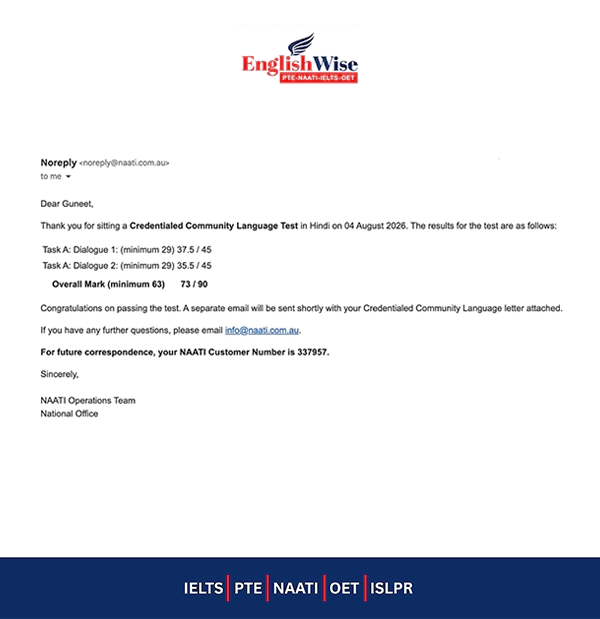
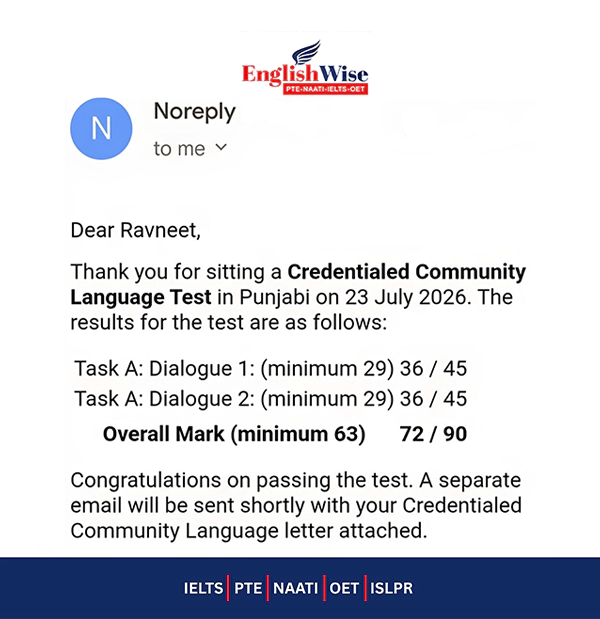
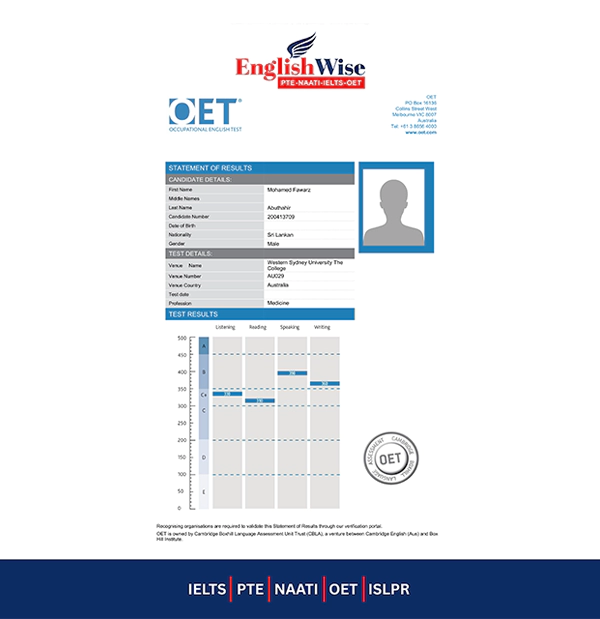
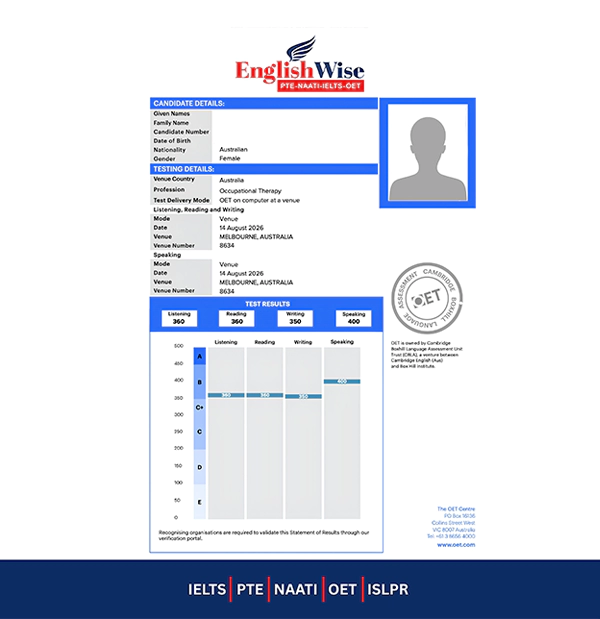
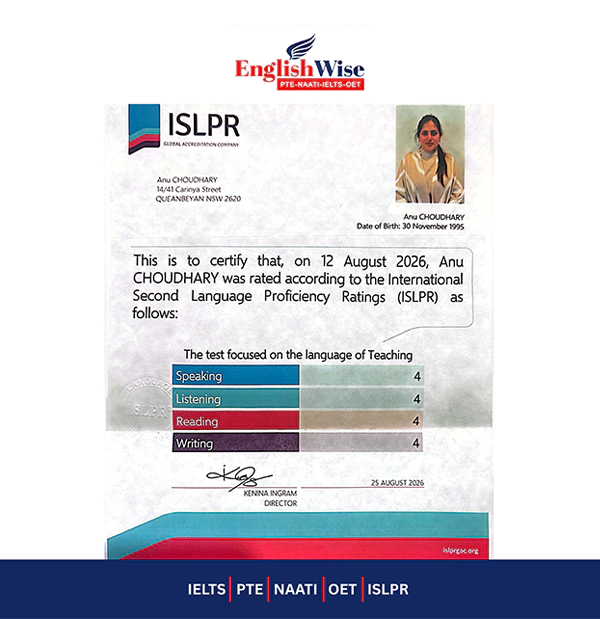
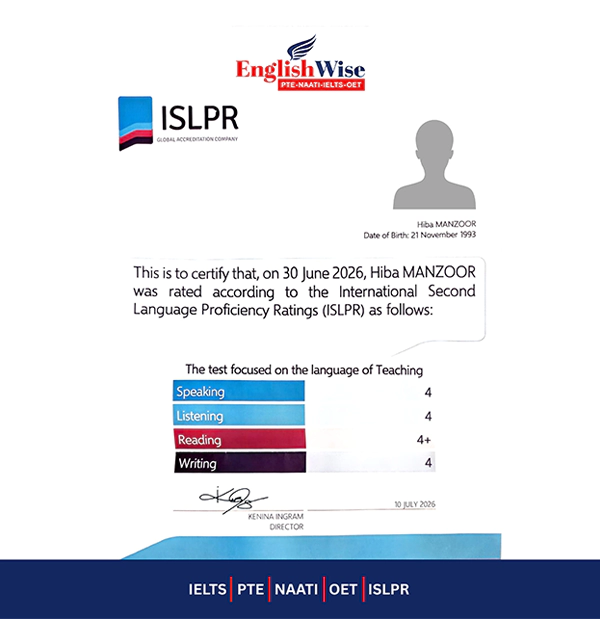
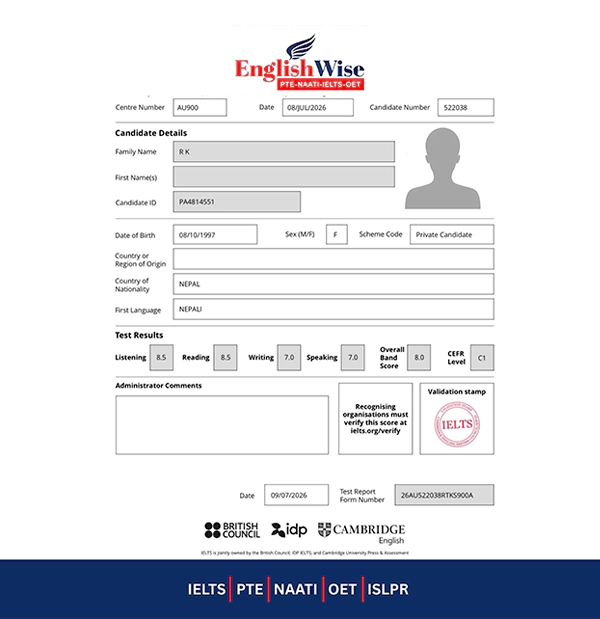
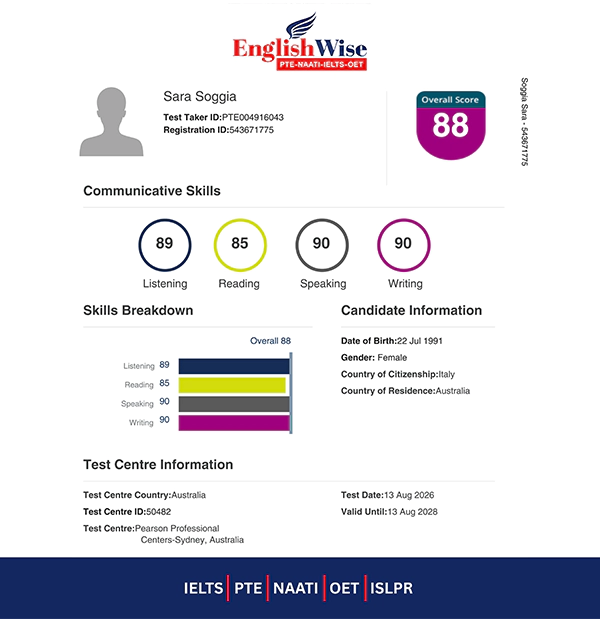
What Our Students Say
Why Choose EnglishWise

AI Scored Mock Tests (similar to real IELTS exam)

Repeated Questions Updated Weekly

Trainers sit real exams regularly for latest insights

Personalised feedback for every student

Flexible class timings (Morning / Afternoon / Evening)

Access to online student portal

Proven success rate with thousands of students
Get in Touch
"*" indicates required fields
Achieve Your IELTS Goal with Expert Training in Melbourne!
Free Consultation | Demo Classes | Level-Assessment


 Courses We Offer
Flexible IELTS Programs for Every Goal
 Course Options
- 4 Weeks Fast-Track Course
- 8 Weeks Comprehensive Training
- 12 Weeks Advanced Preparation
 Premium Option
- 1 Year Unlimited IELTS Course
- Study until you reach your target band score
- Unlimited class access
- Continuous trainer support
 Modules Covered
- Listening
- Writing (Task 1 & Task 2)
- Speaking (Mock interviews + feedback)
 Learning Modes
- Group Classes (In-person & Online)
- One-on-One Coaching (Personalised training)
What Do You Get At EnglishWise

Expert IELTS trainers with real exam experience

Detailed feedback on Writing Task 1 & 2

Real Speaking mock tests (exam-like environment)

Weekly progress tracking

Latest exam questions & updated materials

Flexible class timings (Morning / Afternoon / Evening)

Online + In-person learning options

High success rate for PR & student visa goals
Frequently Asked Questions
01What is IELTS and why do I need it? →
IELTS (International English Language Testing System) is an internationally recognised English proficiency test used for study, work, professional registration, and migration purposes. Many universities, employers, and immigration authorities in Australia and overseas require IELTS scores as proof of English language ability. The test assesses your Listening, Reading, Writing, and Speaking skills.
02Which IELTS test should I take – Academic or General Training? →
The IELTS Academic test is typically required for university admissions and professional registration, while IELTS General Training is commonly used for migration and employment purposes. Choosing the right test depends on your goals. Our IELTS trainers in Melbourne can guide you through the requirements and help you prepare for the version that best suits your future plans.
03How can IELTS coaching improve my score? →
Professional IELTS coaching provides structure, expert guidance, and targeted feedback that self-study often lacks. At EnglishWise Melbourne, our trainers help you understand the test format, improve your exam techniques, and strengthen your English skills. Through practice tests, personalised feedback, and proven strategies, you can approach the exam with greater confidence and preparation.
04What band score do I need for study, work or immigration? →
The required band score depends on the institution, employer, profession or visa pathway. Universities in Melbourne and across Australia may have different requirements, while migration and professional registration bodies often require specific band scores. Our team can help you understand your requirements and create a preparation plan to help you achieve them.
05How long does it take to prepare for IELTS? →
Preparation time depends on your current English proficiency level, target band score and study commitment. Some students preparing for IELTS in Melbourne achieve their goals within a few weeks, while others benefit from longer-term preparation. After assessing your skills, our trainers can recommend a personalised study plan tailored to your objectives and timeline.
06Do you provide IELTS mock tests and practice exams? →
Yes. Our IELTS preparation courses include realistic practice tests and mock exams that closely reflect the actual test experience. These assessments help you become familiar with question types, improve time management, and identify areas for improvement. Detailed feedback from our Melbourne-based IELTS trainers helps you focus on the skills that matter most.
07Can I get help with IELTS writing and speaking? →
Yes, at EnglishWise we offer guidance in each part of the IELTS exam and this includes both writing and speaking. Writing and Speaking are often the most challenging sections of the IELTS exam. Our experienced IELTS tutors in Melbourne provide detailed feedback on writing tasks, grammar, vocabulary, and coherence, while speaking sessions simulate real test conditions. This personalised approach helps improve fluency, confidence, and overall performance on test day.
08Are your IELTS classes suitable for both beginners and advanced learners? →
Yes, our IELTS classes in Melbourne are designed to support learners at various proficiency levels. Whether you are taking IELTS for the first time or aiming for a higher band score, our trainers adapt lessons to your individual needs. This ensures you receive the right level of support and guidance throughout your IELTS preparatory journey.
09Why choose EnglishWise for IELTS preparation in Melbourne? →
At EnglishWise, we are a trusted provider of IELTS coaching in Melbourne, offering expert guidance, personalised support, and practical exam preparation. Our experienced trainers focus on all four IELTS modules while providing tailored feedback and proven strategies. We are committed to helping students, professionals, and migrants achieve their target scores and reach their goals with confidence.
More About IELTS Melbourne Course
IELTS Classes Tailored For Your Test Preparation
A good IELTS score can open doors to universities, jobs, and even permanent residency in English-speaking countries. But taking the test and getting high band scores is challenging. The exam format can contain complex paragraphs that might be confusing.
At EnglishWise, we have been helping candidates with targeted coaching focusing on both their strong and weak areas. With an experience spanning more than a decade, we understand the common pitfalls that students face and know how to overcome them.
Our IELTS coaching (offline and online) consists of a well-thought-out plan that enables you to work faster, think clearly and approach every question with a strategy that works. Studying with us provides you:
- An inclusive package with 5 full mock tests
- 100+ hours of coaching and assessment
- Opportunity to practice unlimitedly at our well-equipped institute
We bifurcate your preparation into the four test areas as per the modules, i.e., Listening, Reading, Writing, and Speaking and tailor each session to your needs. Our educators conduct regular mock tests aligned with the IELTS syllabus and give you personal feedback. It’s not merely a “try harder”, but a detailed description of what worked and what can be improved. We ensure to minimise the timeframe between the test and its feedback, so you can promptly apply the suggestions in your preparation.
Why Is IELTS A Preferred English-Proficiency Exam Worldwide?
IELTS is the only English test recognised by every immigration authority requiring proof of language skills. It’s developed by three respected institutions that bring over 250 years of combined experience in language assessment. These are:
- British Council
- Cambridge English, and
- IDP Australia
Over 12,500 organisations worldwide trust IELTS scores. So, if you’ve got a high band score, you finally get to live the long-chased dream, whether it’s of admission in the desired university or increasing your chance of grabbing the aspired job.
At EnglishWise, we make sure your offline and online IELTS coaching matches the test you’re taking:
- IELTS Academic – for students aiming for higher education overseas
- IELTS General – for professionals seeking employment or residency abroad
Both the “Academic” and “General” exams have two distinctions. Firstly, the reading section of the former is slightly more complex, comprising longer sentences and passages taken from academic journals, books and magazines. Secondly, the writing section of the “General” exam includes a formal/informal letter, while that of “Academic” is to describe, summarise and explain a visual prompt.
Achieve Your Target Score with IELTS Coaching in Melbourne
IELTS scores range from 0 to 9. Many universities consider 6.0 or above in Academic IELTS as a solid score, while postgraduate programs often demand more. For General IELTS, 6.0 signals competence, but some vocational training routes accept 5.5.
We’ve coached students who needed only a slight score improvement to meet requirements, and others who were starting almost from scratch. That’s why we offer four flexible options:
- IELTS Supreme: 4 weeks
- IELTS Booster: 3 months
- IELTS Regular: 6 months
- IELTS Regular: 1 year
Each of our courses is customised as per your needs. We also assist with exam booking procedures so there are no last-minute panics over paperwork or missed deadlines.
Our program helps in building your English language skills that you’ll carry beyond the test. Whether it’s at your educational institute or workspace, communication will become effortless.
You’ll get recorded lessons, curated study materials, and model answers that show exactly what examiners want to see. Our Melbourne-based offline and online IELTS coaching classes include vocabulary lists, speaking practice sessions, and in-depth writing reviews so you’re not left wondering where you stand.
Before each test window, we run intensive sessions that mimic the real exam. You’ll practise under the same time pressure, with the same types of questions, so you walk in on the day feeling prepared, not nervous.
In case of more queries regarding our approach, reach out to our professionals. We will be happy to convey in detail how we optimise classes as per your needs.
IELTS Academic Test Structure
A clear understanding of the IELTS test structure is essential for effective preparation. Familiarity with the format allows one to allocate their time appropriately during the exam and practise skills relevant to each component. The IELTS Academic test comprises four sections — Listening, Reading, Writing, and Speaking, each designed to assess specific aspects of English language proficiency in an academic or professional context.
We provide comprehensive training across all test sections –

Listening
- Multiple Choice
In this question, you will listen once to an audio recording and select the correct answer/answers from the given options. The questions appear in the same sequence as the information in the recording. You have to recognise meaning, identify paraphrases and avoid distractors that may sound convincing but are incorrect. - Matching
This task involves connecting numbered items to a list of possible matches, such as linking speakers to opinions or locations to activities. You have to follow the flow of ideas, notice changes in context and interpret tone or emphasis. It can help you reveal the answer more clearly than vocabulary alone. - Plan, Map, Diagram Labelling
While listening, you complete missing labels on a plan, map, or diagram. Understanding spatial language and sequence is essential, as a wrong placement will cost the mark. The task tests the ability to visualise descriptions accurately while observing spelling rules and following any stated word-limit requirements. - Form, Note, Table, Flow-chart, Summary Completion
In this question type you transfer specific details from the recording into a provided outline. The content may or may not follow a logical order. While answering you must ensure the grammar fits, meaning remains accurate, and no extra words are added. - Sentence Completion
You fill in the blanks of given sentences using exact words or short phrases from the audio. The completed sentence must be grammatically correct and preserve the intended meaning. The recording may use synonyms rather than identical terms, so recognising equivalent expressions is essential for choosing the right answer. - Short-Answer Questions
This requires brief factual answers, such as names, dates, or numbers. The questions follow the order of the recording, so missing a detail means losing the mark. Correct spelling and strict adherence to word limits are essential.

Reading
- Multiple Choice
Select the answer that best matches the question or completes the sentence. The sequence of questions reflects the passage’s order. This task measures the ability to locate evidence, interpret meaning accurately, and reject options that appear plausible but are not fully supported by the text. - Identifying Information (True/False/Not Given)
Determine whether each statement agrees with the passage, contradicts it, or is not included. The only correct responses are True, False, or Not Given. Outside knowledge should not be applied. Although questions follow the text’s order, careful reading is required to detect even subtle shifts in meaning. - Identifying Writer’s Views (Yes/No/Not Given)
You decide if a statement agrees with the writer’s view (Yes), disagrees (No), or is not stated (Not Given). It tests recognition of opinion and tone rather than factual agreement. - Matching Information
Find the location of specific details in the text and match them to their correct paragraph. Paragraphs are labelled with letters, and some may contain more than one answer. Skimming for keywords is helpful, but confirming surrounding context ensures the match is accurate and avoids misinterpretation. - Matching Headings
Choose a heading that represents the main idea of a paragraph or section. Supporting details or examples should not guide the choice, as they can be misleading. Some headings will remain unused. This task rewards the ability to identify central themes clearly and efficiently. - Matching Features
Link statements or pieces of information to the correct person, group, or category. Options may be used multiple times or not at all. Answers often require combining information from different parts of the passage, making it essential to read for meaning rather than just matching words. - Matching Sentence Endings
Complete each sentence beginning by selecting the correct ending from a given list. The result must form a complete and accurate statement supported by the passage. Questions typically follow the order of the text. Understanding the logical relationship between ideas is more important than matching vocabulary alone. - Sentence Completion
Fill in missing words from the passage to complete the sentence. The answer must meet the word-limit requirement and be grammatically correct. Often, the text rephrases the same idea differently, so scanning for synonyms and equivalent expressions is essential to finding the correct answer. - Summary, Note, Table, Flow-chart Completion
You complete a summary, table, or flow-chart using words from the passage or a provided list. The sequence of information may not match the text exactly. Grammar must fit naturally, and answers must follow the given word limit to be considered correct. - Diagram Label Completion
Complete a diagram with missing labels using words from the passage. The diagram may show an object, process, or system. Answers must be spelled correctly and follow any stated word limit. The task requires linking textual descriptions to the visual representation accurately. - Short-Answer Questions
Provide concise answers using words taken directly from the passage. Adhere strictly to the word limit and spelling rules. Locating exact details quickly is key, while avoiding similar but incorrect information that may appear elsewhere in the text. No rephrasing or additional interpretation is permitted.

Writing
- Task 1 (Academic)
Write at least 150 words describing visual data such as a graph, table, chart, or diagram. Summarise main features, compare key points, and explain processes when required. Keep tone formal and factual, with information presented in a logical order. Avoid personal opinion or irrelevant detail. - Task 2 (Academic)
Produce a formal essay of at least 250 words in response to a given problem, argument, or viewpoint. Present a clear position, support it with evidence or examples, and organise ideas logically. Correct grammar, varied vocabulary, and full coverage of the prompt are required for a high score.
Speaking
- Part 1: Introduction and Interview
In this 4-5 minute section you will have to cover familiar topics such as work, studies, home life, or hobbies. Your responses should be clear, relevant, and delivered naturally without memorised phrases. Assessment focuses on fluency, coherence, and the ability to discuss everyday subjects in a formal context. - Part 2: Long Turn
You receive a topic card with prompts, have one minute to prepare, and then speak for one to two minutes. Cover all points, maintain logical organisation, and support ideas with examples or explanations. The focus is on sustained, coherent speech without constant prompting. - Part 3: Discussion
This 4-5 minute discussion explores broader issues linked to Part 2’s topic. The examiner assesses your ability to express and justify opinions, analyse ideas, and consider alternatives. A wide vocabulary, clear reasoning, and confident delivery are important for a strong performance.